But does it actually work?
At our clinics across London (Knightsbridge, Mayfair, Chelsea, Kensington, Marylebone, Belgravia) and Surrey (Guildford and Esher), we offer advanced carboxytherapy scalp treatments designed to support natural hair regrowth, improve scalp health, and complement other regenerative therapies.
We also provide 7-day availability and short-notice appointments, making treatment accessible when you need it most.
What Is Carboxytherapy for Hair Loss?
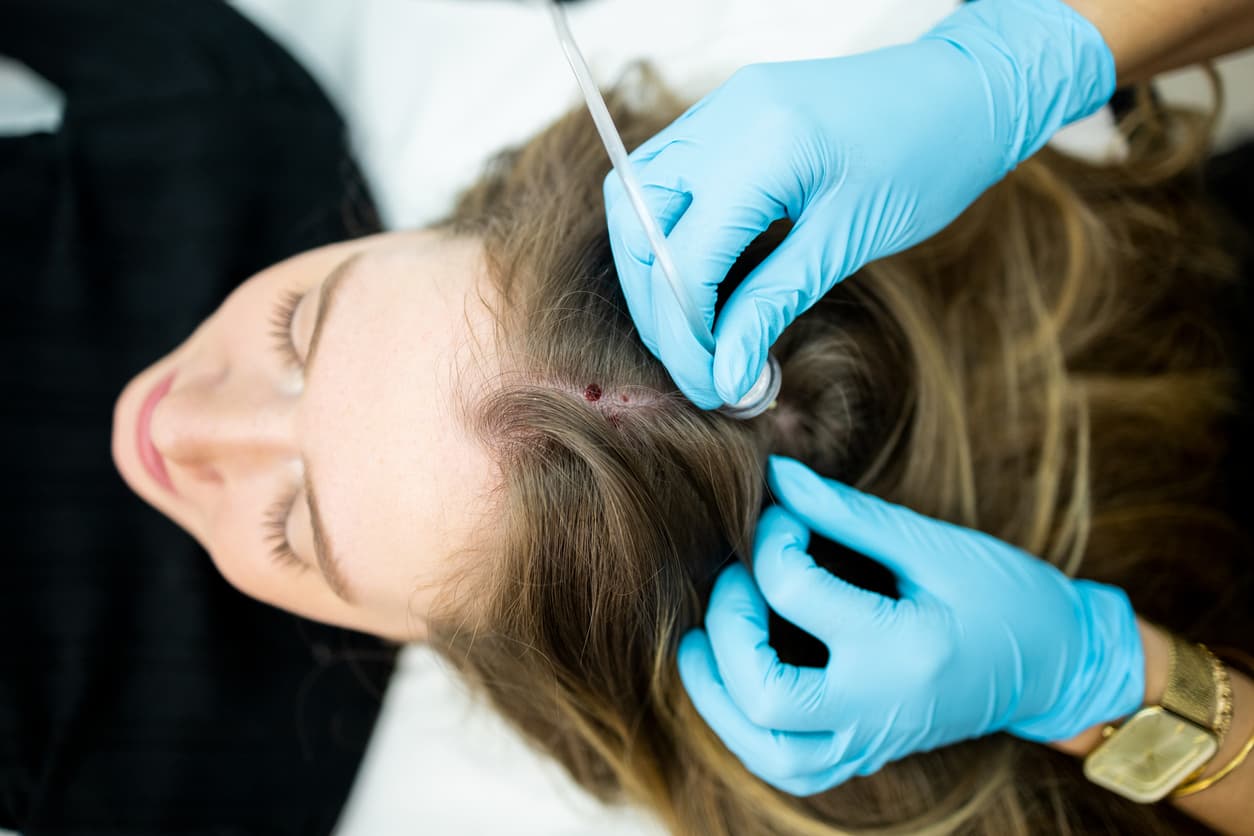
Carboxytherapy is a treatment that involves injecting small amounts of medical-grade carbon dioxide (CO₂) into the scalp.
While this may sound unusual, the science is simple and powerful.
How It Works:
When CO₂ is introduced into the scalp:
- Blood vessels dilate (vasodilation)
- Oxygen delivery increases
- Circulation improves
- Nutrients reach hair follicles more effectively
This creates an environment where weakened or dormant hair follicles can become active again.
The Science Behind CO₂ Therapy for Hair Loss
Think of your hair follicles like plants.
If the soil (your scalp) is poorly nourished and lacks oxygen, growth slows or stops. Carboxytherapy acts like a natural irrigation system, restoring flow and vitality.
Key benefits include:
- Increased oxygenation of the scalp
- Improved microcirculation
- Stimulation of growth factors
- Reduction in inflammation
This is why CO₂ therapy for hair loss is gaining popularity in regenerative medicine.
Does Carboxytherapy Really Regrow Hair?
The honest answer: it can—especially in the right patients.
Carboxytherapy works best when:
- Hair follicles are still alive but underperforming
- Hair thinning is in early to moderate stages
- Circulation to the scalp is compromised
It may not fully restore hair in advanced baldness, but it can:
- Improve hair density
- Strengthen existing hair
- Slow further hair loss
What to Expect During Treatment
Step 1: Scalp Assessment
We assess your scalp health and hair loss pattern to determine suitability.
Step 2: Carboxytherapy Injections
Small amounts of CO₂ are delivered into targeted areas of the scalp.
Step 3: Recovery
There is minimal downtime, and most patients return to normal activity immediately.
Treatment time: 20–30 minutes
How Many Sessions Are Needed?
Most patients require:
- 6–10 sessions (weekly or biweekly)
- Followed by maintenance treatments
Hair regrowth is gradual, with visible improvements typically seen after 8–12 weeks.
Carboxytherapy vs Other Hair Loss Treatments
Carboxytherapy is often compared to other options:
vs PRP (Platelet-Rich Plasma)
- PRP delivers growth factors
- Carboxytherapy improves blood flow
- Best results often come from combining both
vs Medications (Finasteride/Minoxidil)
- Medications alter hormones or stimulate follicles chemically
- Carboxytherapy works naturally through circulation
vs Hair Transplant
- Transplants relocate hair follicles
- Carboxytherapy enhances the existing scalp environment
Who Is This Treatment Suitable For?
You may benefit from carboxytherapy hair regrowth treatment if you have:
- Early-stage hair thinning
- Stress-related hair loss
- Hormonal imbalance
- Poor scalp circulation
It is suitable for both men and women.
Why Choose Our Clinics in London and Surrey?
We provide advanced hair loss treatment in London and Surrey, combining science with personalised care.
Our Approach:
- Tailored treatment plans
- Integration with regenerative therapies (PRP, peptides, nutrition)
- Premium clinic locations
- 7-day availability and short-notice bookings
Locations:
London:
Knightsbridge, Mayfair, Chelsea, Kensington, Marylebone, Belgravia
Surrey:
Guildford, Esher
Is Carboxytherapy Safe?
Yes. Carboxytherapy has been used in medicine for decades and is considered:
- Minimally invasive
- Low risk
- Well tolerated
Side effects are usually mild and temporary:
- Redness
- Slight swelling
- Mild discomfort

Final Thoughts
By improving blood flow, oxygenation, and follicle health, it helps create the conditions needed for hair to grow naturally again.
For many patients, it becomes part of a broader strategy for hair restoration, rather than a standalone solution.
If you’re looking for a natural, science-backed hair loss treatment in London or Surrey, carboxytherapy is well worth considering.
Frequently Asked Questions: Carboxytherapy for Hair Loss
1. What is carboxytherapy for hair loss?
Carboxytherapy involves injecting CO₂ into the scalp to improve circulation and stimulate hair follicles.
2. Does carboxytherapy really regrow hair?
It can stimulate regrowth in early-stage hair loss by reactivating dormant follicles.
3. How does CO2 therapy help hair loss?
It increases blood flow, oxygen, and nutrient delivery to the scalp.
4. Is carboxytherapy effective for thinning hair?
Yes, particularly in early to moderate thinning.
5. How many sessions are needed?
Typically 6–10 sessions with maintenance.
6. Is it safe?
Yes, when performed by trained professionals.
7. Is it painful?
Mild discomfort only, usually well tolerated.
8. How long does it take?
20–30 minutes per session.
9. Any side effects?
Mild redness or swelling may occur briefly.
10. When will I see results?
Usually within 2–3 months.
11. Can men and women both have it?
Yes, it’s suitable for both.
12. Better than PRP?
They work differently—often best combined.
13. Can it be combined with other treatments?
Yes—PRP, mesotherapy, supplements, hormones.
14. Downtime?
None or minimal.
15. Who is it best for?
Early hair loss, poor circulation, hormonal imbalance.
16. Can it treat alopecia?
It may help some forms, depending on cause.
17. Where is it available?
London (Knightsbridge, Mayfair, Chelsea, Kensington, Marylebone, Belgravia) and Surrey (Guildford, Esher).
18. Cost in London?
Typically £80–£200 per session.
19. Is it permanent?
No, but it can significantly improve hair health.
20. Why choose a private clinic?
Faster access, advanced therapies, personalised care.